𝗞𝗶𝗰𝗸𝗶𝗻𝗴 𝗢𝗳𝗳 𝗮𝘁 hashtag#EMBC2025
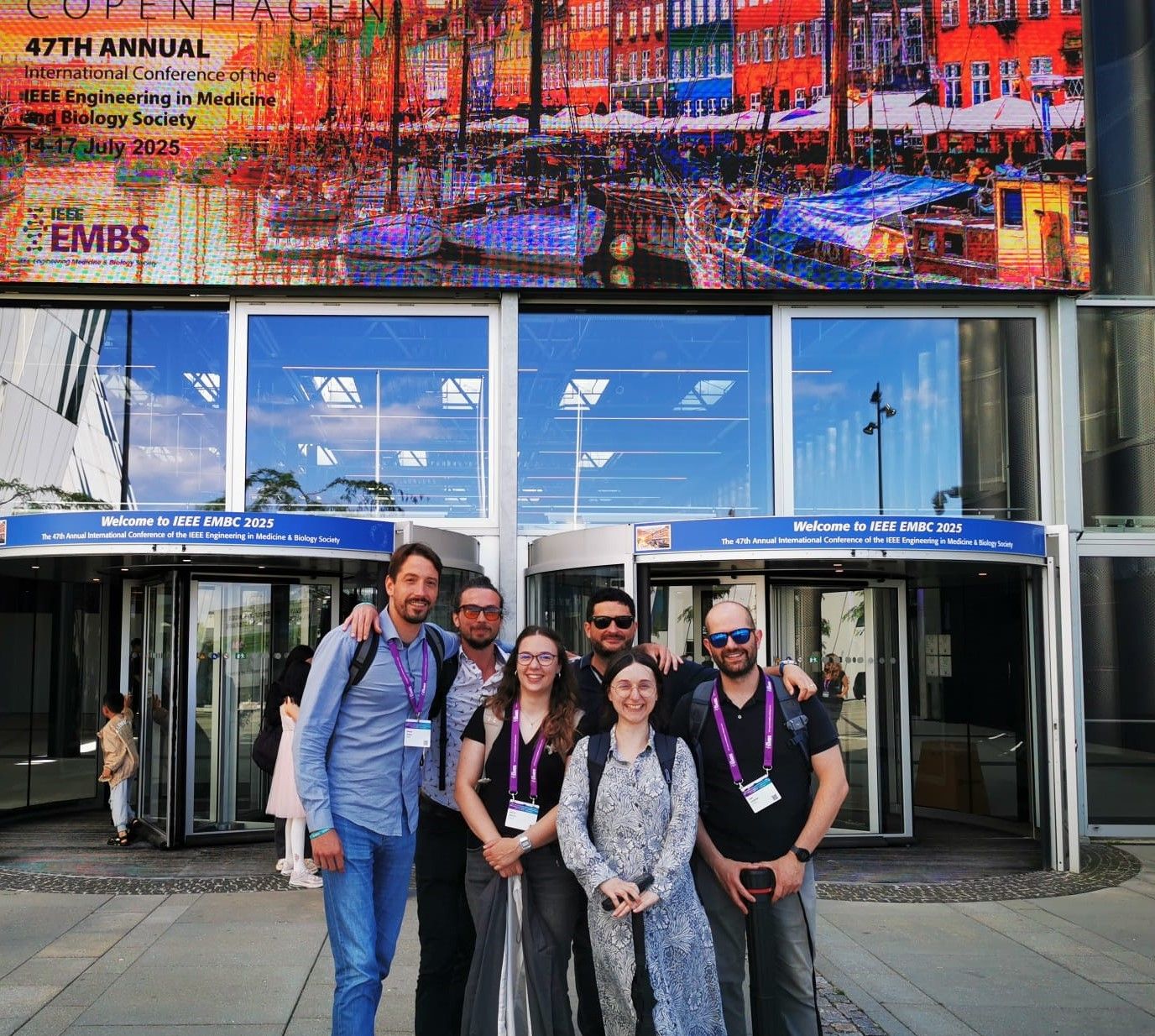
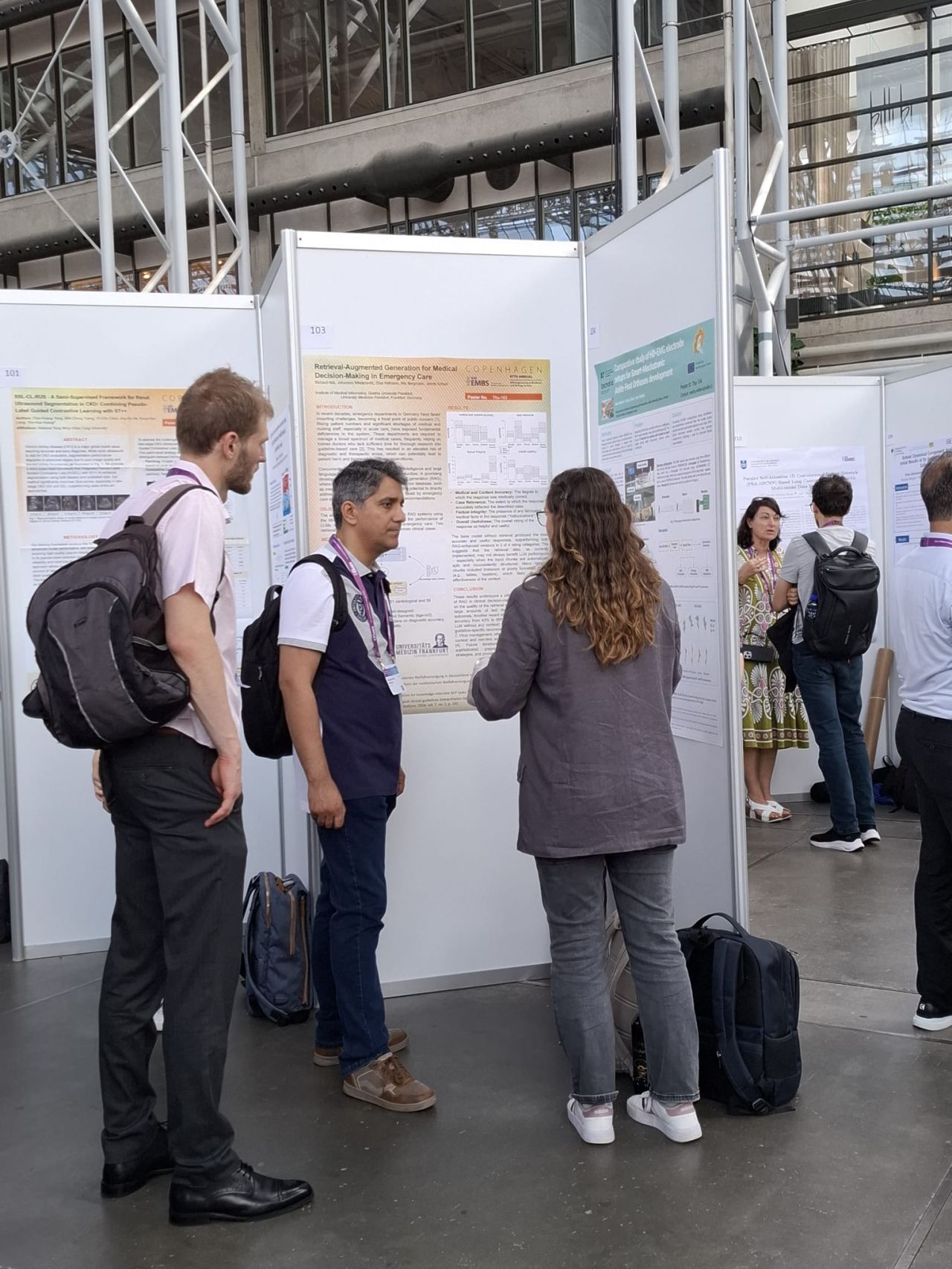
This mid-summer, we found ourselves in Copenhagen at the 47th IEEE Engineering Medicine and Biology Society Conference — gathering fresh ideas, meeting friends and old labmates, making new connections, and simply having fun.
We also marked an exciting milestone: 𝗼𝘂𝗿 𝗳𝗶𝗿𝘀𝘁 𝘀𝗰𝗶𝗲𝗻𝘁𝗶𝗳𝗶𝗰 𝗽𝗿𝗲𝘀𝗲𝗻𝘁𝗮𝘁𝗶𝗼𝗻𝘀!
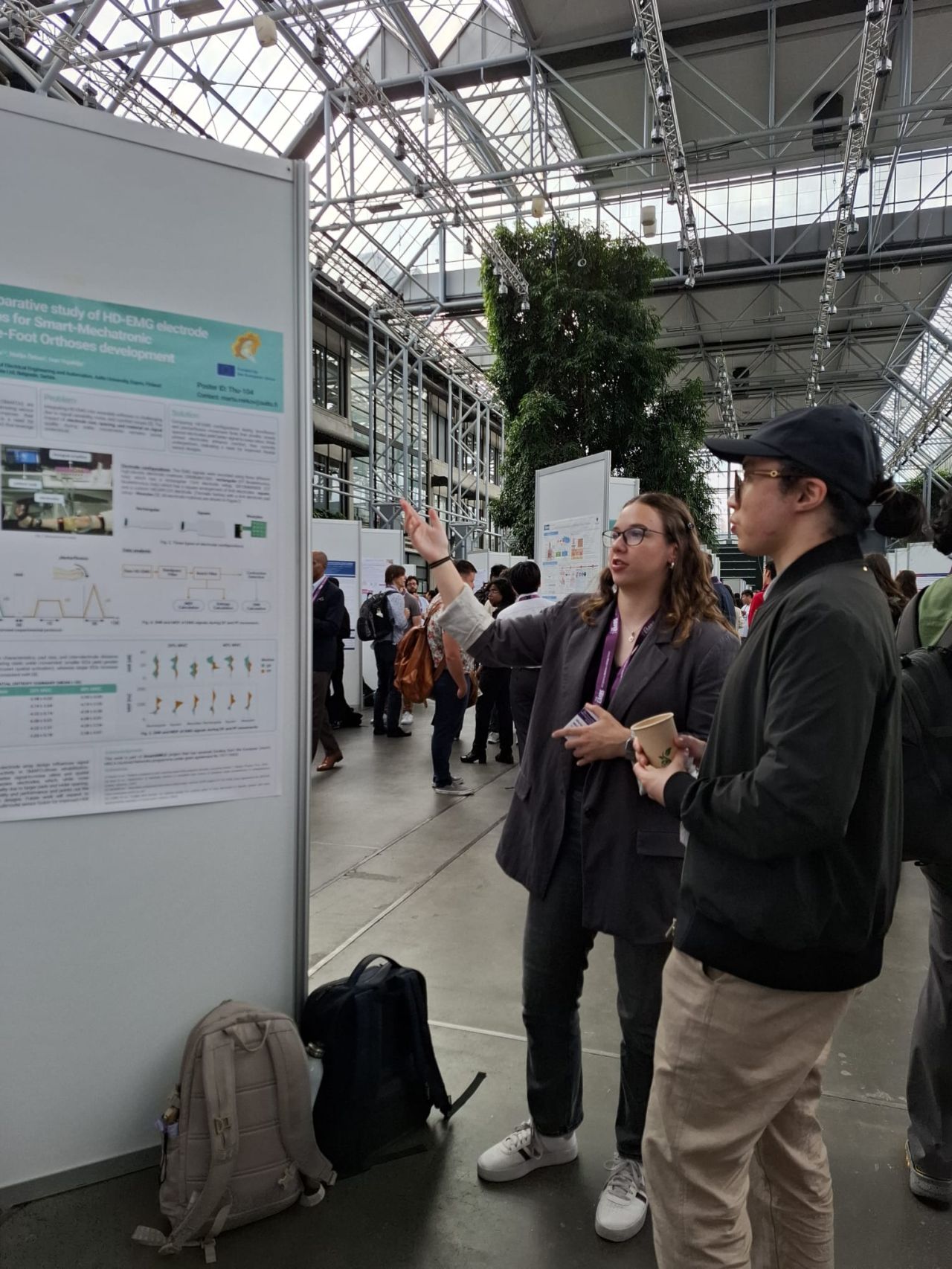
🔎 “𝗖𝗼𝗺𝗽𝗮𝗿𝗮𝘁𝗶𝘃𝗲 𝘀𝘁𝘂𝗱𝘆 𝗼𝗳 𝗛𝗗-𝗘𝗠𝗚 𝗲𝗹𝗲𝗰𝘁𝗿𝗼𝗱𝗲 𝘀𝗲𝘁𝘂𝗽𝘀 𝗳𝗼𝗿 𝗦𝗺𝗮𝗿𝘁 𝗠𝗲𝗰𝗵𝗮𝘁𝗿𝗼𝗻𝗶𝗰 𝗔𝗻𝗸𝗹𝗲-𝗙𝗼𝗼𝘁 𝗢𝗿𝘁𝗵𝗼𝘀𝗲𝘀 𝗱𝗲𝘃𝗲𝗹𝗼𝗽𝗺𝗲𝗻𝘁” evaluates different high-density electromyography (HD-EMG) electrode configurations to investigate signal quality for future designs, addressing challenges in sensor variability and noise.
The results demonstrate that the electrodes with smaller surface area of sensors provide higher signal-to-noise ratio and more stable signals compared to the larger electrodes with a higher interelectrode distance. Additionally, while printed electrodes tend to offer greater comfort, due to their flexible design, they performed worse in comparison to their conventional counterparts. The study highlights the need for further investigation of alternative printed interfaces and materials, which will allow for smaller and more densely placed electrode pads while retaining the overall malleability.
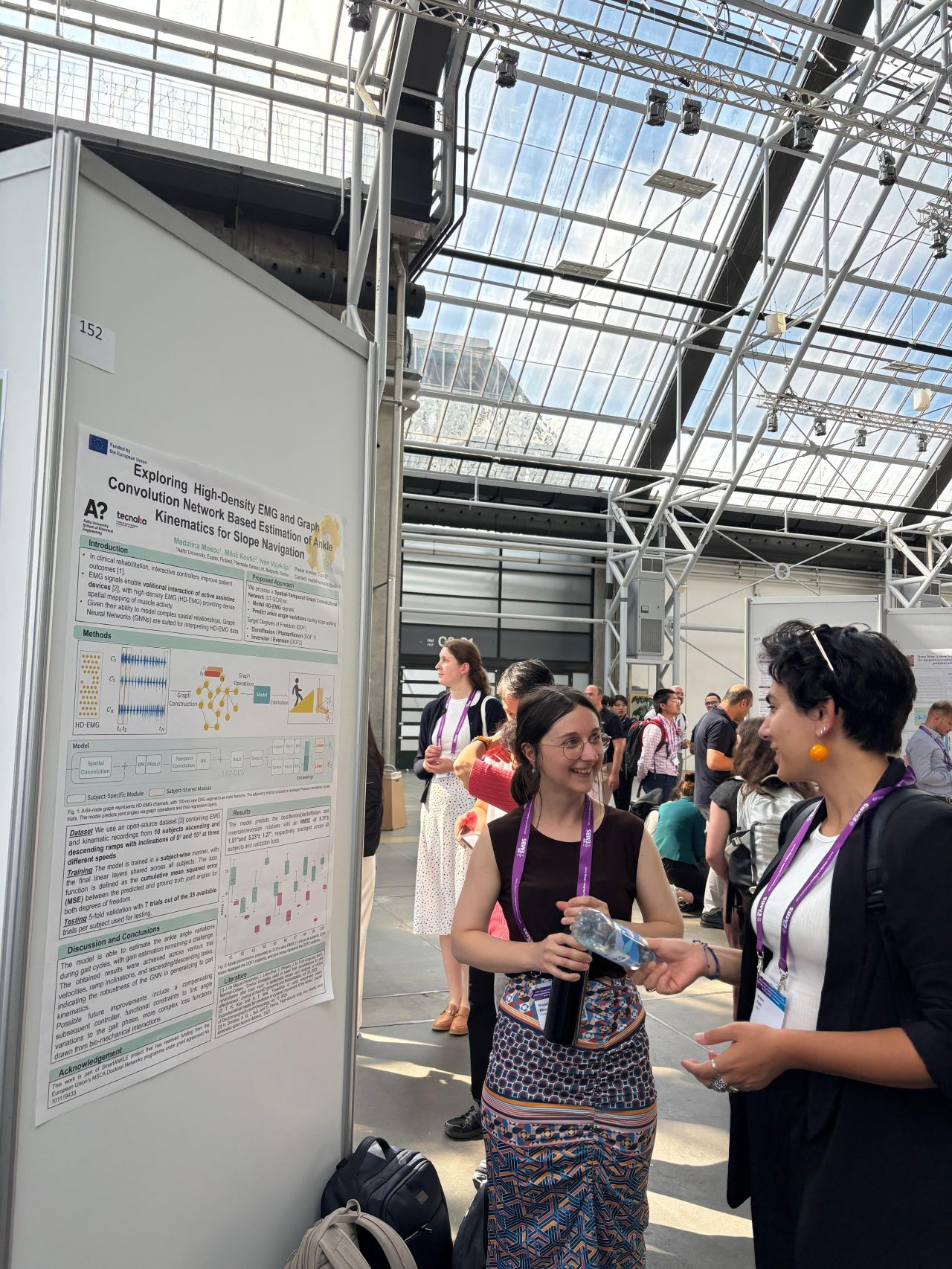
⚙️”𝗘𝘅𝗽𝗹𝗼𝗿𝗶𝗻𝗴 𝗛𝗶𝗴𝗵-𝗗𝗲𝗻𝘀𝗶𝘁𝘆 𝗘𝗠𝗚 𝗮𝗻𝗱 𝗚𝗿𝗮𝗽𝗵 𝗖𝗼𝗻𝘃𝗼𝗹𝘂𝘁𝗶𝗼𝗻𝗮𝗹 𝗡𝗲𝘁𝘄𝗼𝗿𝗸-𝗕𝗮𝘀𝗲𝗱 𝗘𝘀𝘁𝗶𝗺𝗮𝘁𝗶𝗼𝗻 𝗼𝗳 𝗔𝗻𝗸𝗹𝗲 𝗞𝗶𝗻𝗲𝗺𝗮𝘁𝗶𝗰𝘀 𝗳𝗼𝗿 𝗦𝗹𝗼𝗽𝗲 𝗡𝗮𝘃𝗶𝗴𝗮𝘁𝗶𝗼𝗻” investigates the performance of a Spatio-Temporal Graph Convolutional Network coupled with High-Density EMG to infer ankle joint-angle variations during ramp up and down ambulation, with the aim of providing more effective robot-assisted rehabilitation.
The model, trained on combined multiple slope walking scenarios, achieves an average root mean square error of 8.31°± 1.51°for dorsiflexion/plantarflexion and 5.23°± 1.27°for inversion/eversion. Despite these errors, the predicted angle generally follows the trends observed in the original movement throughout the gait cycles. It is worth noting that the model achieved these results across various trial velocities, ramp inclinations, and ascending/descending tasks, indicating the robustness of the GNN in generalizing to gait kinematics.
A small step, maybe — but 𝘄𝗲’𝗿𝗲 𝗺𝗼𝘃𝗶𝗻𝗴 𝗳𝗼𝗿𝘄𝗮𝗿𝗱 𝘄𝗶𝘁𝗵 𝗻𝗲𝘄 𝗲𝗻𝗲𝗿𝗴𝘆 𝗮𝗻𝗱 𝗶𝗱𝗲𝗮𝘀 𝘁𝗼 𝗶𝗺𝗽𝗿𝗼𝘃𝗲 𝗼𝘂𝗿 𝘄𝗼𝗿𝗸.